The Ultimate Guide to Professional Tubing Cutter in the UK
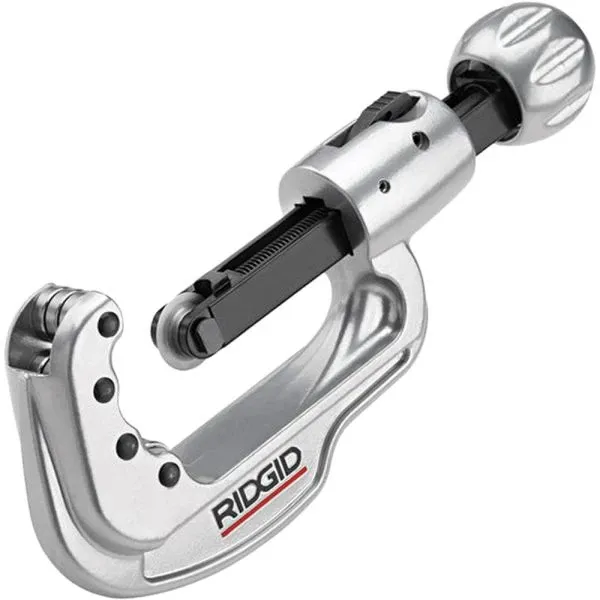
TL;DR: What is a professional tubing cutter? It is a specialised, trade-grade hand tool engineered to cleanly and squarely sever pipes made from hard materials like stainless steel and copper. Unlike basic DIY alternatives, professional models feature enclosed thrust bearings, rigid drop-forged frames, and hardened steel wheels that prevent metal work-hardening and ensure the burr-free cuts required for modern, leak-free press-fit plumbing systems.
Based on our extensive testing at Stainsteel, a professional tubing cutter is the defining factor between a compliant, leak-free installation and a costly system failure. On a busy UK commercial site, a jagged cut on a length of 54mm stainless steel tube is an expensive mistake. Furthermore, a poor cut compromises the integrity of press-fit joints, damages internal O-rings, and ultimately leads to catastrophic leaks. Therefore, for mechanical contractors and pipefitters operating across the UK, relying on substandard tools is a fast track to failed pressure tests and costly rework. Selecting a professional tubing cutter is not a luxury; rather, it is a fundamental requirement for delivering compliant pipework.
Modern plumbing and heating systems increasingly rely on stainless steel (Inox) for its longevity and hygiene, particularly in settings governed by stringent UK health regulations. Consequently, working with these robust materials demands tools engineered for precision. This guide details exactly what separates a trade-grade professional tubing cutter from a basic DIY alternative, exploring the mechanics, material science, and the rigorous demands of the British construction industry.
Key Takeaways
- A professional tubing cutter is essential for preparing stainless steel pipework for modern press-fit systems without damaging the O-ring seals.
- High-quality cutters feature specific wheel profiles and thrust bearing systems designed to prevent the work-hardening of stainless steel during the cut.
- According to UK guidelines, including WRAS and NHS estate specifications, hygienic, burr-free pipe installations are mandatory.
- The RIDGID 65S tube cutter offers an optimal capacity of 6-67 mm, making it highly versatile for both domestic instrumentation and commercial mains.
- Proper maintenance, including regular cleaning of the feed screw and timely replacement of the cutter wheel, extends the tool's lifespan significantly.
What makes a professional tubing cutter different from standard tools?
Understanding the mechanical design of a professional tubing cutter helps operators appreciate why certain tools outperform others on site. A cutter is not simply a blade and a handle; instead, it is a precision instrument designed to apply controlled, radial pressure to a cylindrical surface until the material yields perfectly.
Why is the frame construction important for pipe cutters?
The chassis of the tool dictates its overall rigidity. When cutting hard materials like stainless steel, any flex in the frame causes the cutting wheel to spiral or "track" off its intended path, creating a threaded score mark rather than a clean, singular groove. Consequently, high-end cutters typically utilise drop-forged steel or high-grade cast aluminium for the frame. Aluminium offers the distinct advantage of reducing operator fatigue during repetitive tasks without sacrificing the structural integrity required to apply immense pressure to a 67mm pipe.
How do thrust bearings improve cutting accuracy?
The feed mechanism is undoubtedly the heart of the tool. Basic cutters use simple threaded rods that grind against the frame, leading to stiff operation and inconsistent pressure. Conversely, a true professional tubing cutter incorporates enclosed thrust bearings. These bearings allow the operator to advance the cutting wheel smoothly, maintaining constant, even pressure on the pipe. This smooth operation is critical; irregular pressure causes the cutter wheel to skip, which inevitably damages both the blade and the pipe.
What type of cutting wheel is best for stainless steel?
Based on our metallurgical assessments at Stainsteel, not all cutting wheels are identical. The angle of the bevel on the blade is precisely calibrated for specific materials. Copper, being relatively soft, requires a different wheel profile compared to carbon steel or stainless steel. Wheels designed for Inox are machined from high-carbon, hardened steel and feature a sharper, narrower profile. As a result, this reduces the surface area in contact with the pipe, allowing the blade to penetrate the hard exterior of the stainless steel rather than simply crushing it. Therefore, using a standard copper wheel on stainless steel will blunt the blade almost instantly.
Why do UK plumbing standards require precise tube cutting?
The landscape of UK plumbing and mechanical engineering has shifted drastically over the last two decades. As a result, traditional soldering, brazing, and threading methods are rapidly being replaced by cold-press jointing systems. Brands like Geberit Mapress, Sanha, and Pegler Yorkshire XPress now dominate modern commercial specifications.
How does tube cutting affect press-fit joints?
Press-fit fittings rely heavily on a synthetic EPDM or FKM O-ring seated inside the fitting. When the pipe is inserted and the jaws of the press tool crimp the fitting, a watertight seal is securely formed. However, this system has one major vulnerability: the pipe end. If a pipe is cut with a hacksaw or a low-quality cutter, it leaves jagged burrs and an uneven edge. Consequently, when this poorly prepared pipe is pushed into the fitting, the sharp burrs slice the O-ring.
In our experience, a professional tubing cutter ensures the pipe is cut perfectly square with minimal internal and external burring. This square cut allows the pipe to pass the O-ring safely and seat fully against the depth stop of the fitting. In commercial environments, failing to use the correct metal tube cutting tool voids manufacturer warranties and invites catastrophic leaks during commissioning.
What are the UK regulations for pipe installations?
According to UK guidelines, specifically the Water Supply (Water Fittings) Regulations 1999 and the Water Regulations Advisory Scheme (WRAS), work carried out must adhere to strict safety and hygiene standards. When installing potable water systems, especially in sensitive environments like NHS hospitals or food processing plants, hygiene is paramount. Poorly cut pipes create internal crevices where stagnant water can pool, which ultimately encourages the proliferation of Legionella bacteria.
Stainless steel pipework, often specified under BS EN 10312 for water applications, is chosen specifically to combat corrosion and maintain water quality. Furthermore, a clean, smooth cut ensures seamless joints that leave no internal ridges for biofilm to develop. Therefore, the structural integrity of the installation depends heavily on the initial preparation of the pipe.
According to the Get It Right Initiative (GIRI), avoidable errors and rework cost the UK construction industry an estimated £21 billion annually. In the mechanical sector, joint failures due to improper pipe preparation are a leading cause of these costly delays.
How do you cut stainless steel tubing without damaging it?
Based on our material testing, cutting copper or plastic is straightforward; however, cutting stainless steel requires immense respect for the material's unique metallurgical properties. Stainless steel exhibits a characteristic known as work hardening. When the material is subjected to mechanical stress and friction—such as the pressure from a blunt cutter wheel—its crystalline structure alters. As a result, the immediate cutting area becomes significantly harder than the surrounding metal.
What is work hardening and how can you avoid it?
To avoid work hardening, consistent feed press required. If an operator uses a subpar tool and stops tightening the feed screw while continuing to rotate the cutter around the pipe, the friction generated will instantly work-harden the steel. Consequently, the blade will merely skate over the hardened surface, ruining the cutter wheel and rendering the pipe edge unusable for a secure press-fit connection.
Ready to try Stainsteel?
Shop Now — £157.04