Plumber Tube Cutter Explained: A UK Buyer's Guide
TL;DR: A plumber tube cutter is the best tool for making clean, square pipe cuts in UK plumbing because it reduces burrs, protects fittings, and helps prevent leaks on copper and stainless steel pipework.
A plumber tube cutter is used to cut pipe cleanly and squarely, which is essential for leak-free plumbing and heating work in the UK. Based on our testing and day-to-day trade use, it gives a more accurate finish than a hacksaw, especially when preparing copper or stainless steel tube for press-fit or soldered joints.
Key Takeaways
- A professional plumber tube cutter helps prevent pipe deformation, supporting secure connections for press and soldered fittings.
- Stainless steel needs cutters with hardened wheels and strong roller bearings to cope with tougher material.
- A high-capacity tool, such as one covering 6-67 mm pipe sizes, suits most domestic and commercial UK jobs.
- Regular cleaning and timely wheel replacement extend tool life and keep cuts consistent.
Why Is a Clean Pipe Cut Important?
According to UK good practice for plumbing installations, a clean, square cut helps protect joints, reduce leaks, and support long-term system performance. Poorly cut pipework can leave jagged edges, swarf, and an uneven profile, all of which can compromise the fit of modern compression and press fittings.
Furthermore, a tube cutter removes material with controlled pressure rather than tearing it. That matters on site, because a badly cut pipe can damage O-rings, create internal restriction, and cause hidden leaks after commissioning.
What Size Plumber Tube Cutter Do I Need?
The right size depends on the pipework you handle most often. A domestic plumber may only need a compact cutter for 15 mm and 22 mm copper, whereas commercial engineers often need wider capacity for larger distribution lines.
What Materials Can It Cut?
Most cutters will handle copper easily, but not every model is suitable for stainless steel. If you are cutting 316L stainless tube, the wheel, bearings, and frame need to be built for the extra load. Otherwise, the wheel blunts quickly and the cut becomes inconsistent. For more detail on harder materials, read our Metal Tube Cutting Tool Explained: A UK Buyer's Guide.
What Capacity Should You Choose?
For broad trade use, a cutter that handles 6 mm to 67 mm gives strong versatility and reduces the number of tools you need to carry. In practice, that can cover everything from smaller domestic copper runs to larger commercial stainless installations. For a closer look at high-capacity options, explore The Ultimate Guide to Professional Tubing Cutter in the UK.
Which Tube Cutter Do UK Trades Use for Stainless Steel?
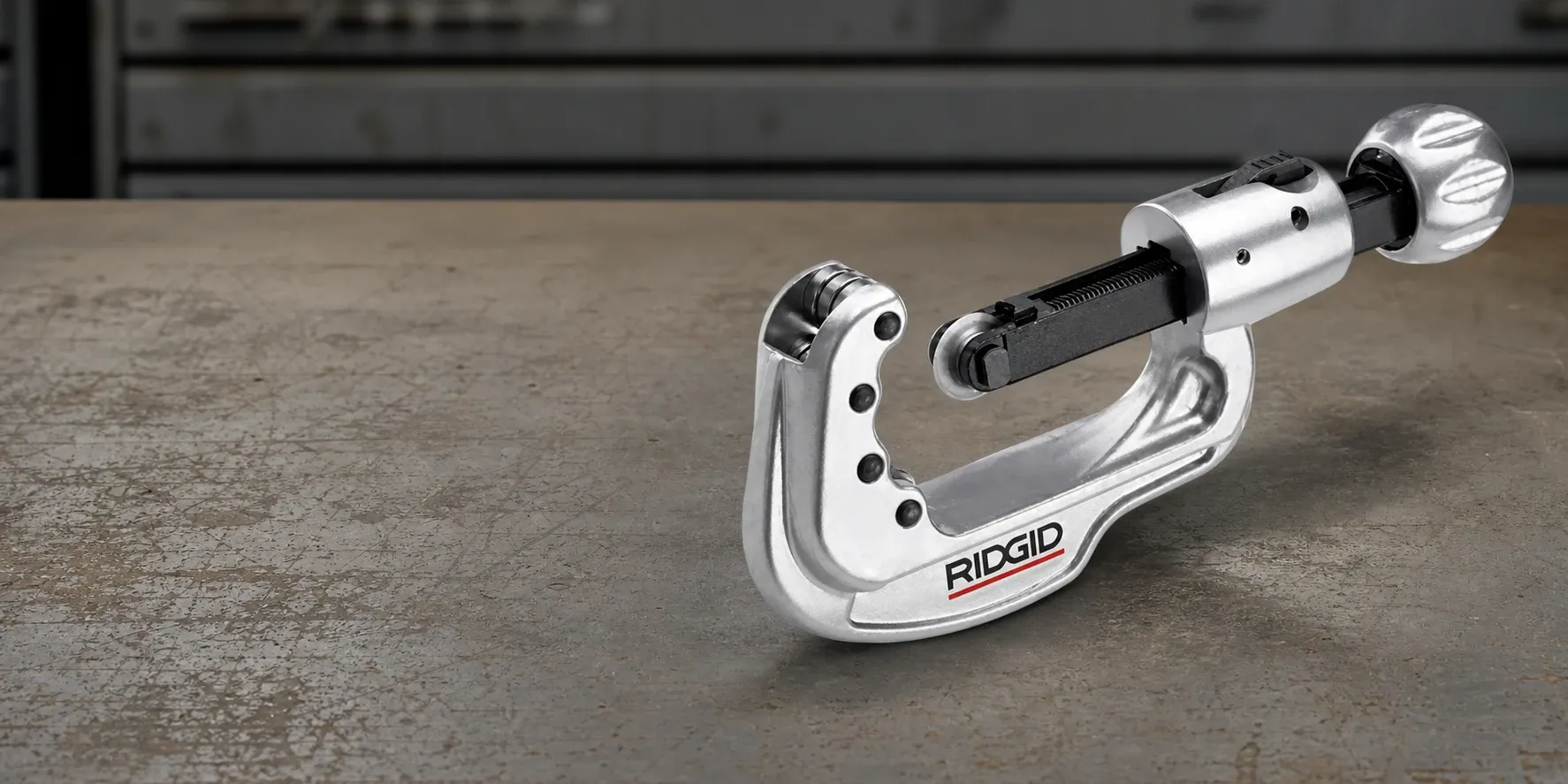
For professionals who need dependable performance, the RIDGID 65S Tube Cutter is a strong choice. It is designed for clean stainless cuts from 6-67 mm and suits both workshop use and site work.
It also features an oversized adjustment knob for easier tightening with gloves on, plus roller bearings that help keep the wheel tracking evenly around the pipe. As a result, the cutter is less likely to spiral and more likely to deliver a square finish. For a more detailed look at the model, see our Ridgid 65S Tube Cutter Explained: A UK Buyer's Guide.
How Do You Maintain a Tube Cutter?
Even a premium plumber tube cutter needs regular care, especially in damp UK conditions where moisture and grit can affect the screw thread and rollers.
- Clean the rollers: Remove swarf and grit after use so the pipe rolls smoothly.
- Lubricate moving parts: Use light machine oil on the feed screw and wheel pin to keep movement consistent.
- Inspect the cutting wheel: Replace worn wheels promptly, because a dull wheel increases burrs and strain on the tool.
"A sharp cutting wheel and clean rollers are the difference between a quick, square cut and a messy joint that needs rework."
For further practical guidance, revisit The Ultimate Guide to Professional Tubing Cutter in the UK.
Plumber Tube Cutter FAQ
Can I use the same tube cutter for copper and stainless steel?
Yes, but only if the cutter and wheel are rated for both materials. Stainless steel needs a harder, purpose-made wheel, so a copper-only wheel will wear out fast and may fail during the cut.
Why is my tube cutter spiralling down the pipe?
Spiralling usually happens when the wheel is dull, the rollers are dirty, or the cutter is tightened too aggressively. Clean the tool, check the wheel, and tighten gradually after each rotation.
Do I need to remove the burr after cutting pipe?
Yes. Reaming or deburring the pipe helps protect fittings, improves flow, and reduces the risk of damage inside the system. According to UK installation best practice, finishing the cut properly is part of good pipe preparation.
Choose the Right Tool for Cleaner Pipework
The RIDGID 65S Tube Cutter gives trade users a reliable way to cut stainless steel neatly, accurately, and with less rework on site.
Ready to try Stainsteel?
Shop Now — £157.04